

From the Classroom to Ukraine: Why Wilderness First Responder Training Matters
Posted by Comms Team 08th July 2026 News
Estimated Reading Time: 2 mins
For REACT Responders, training doesn't end when the course finishes, it becomes part of every deployment. Whether responding to earthquakes, supporting communities affected by conflict in Ukraine, or operating in remote environments where medical help may be hours away, the knowledge and confidence gained through Wilderness First Responder (WFR) training helps our teams make calm, informed decisions when it matters most.
Delivered in partnership with Remote Area Risk International (R2Ri), the seven-day Wilderness First Responder course prepares REACT's international volunteers and medics to manage medical emergencies in remote and austere environments. But beyond the technical skills, the course builds confidence, judgement and the ability to think clearly under pressure. We spoke to two Responders who recently completed the training to hear how it has strengthened their preparedness for deployment.
The first is Lizzie Beach, who believes the course has given her greater confidence in both her medical knowledge and her ability to deploy with REACT.
“Having now completed the WFR course with R2Ri, I feel more prepared to deploy with REACT Disaster Response within a medic capacity. I am now confident in my skills and practical understanding of preventing, assessing, and treating medical emergencies in complex, remote environments”.
Lizzie also reflected on the lasting impact of the training beyond humanitarian deployments.
“The course is taught by some truly amazing people and the knowledge they passed on will stay with me, both on deployment with REACT, and in my day-to-day life”
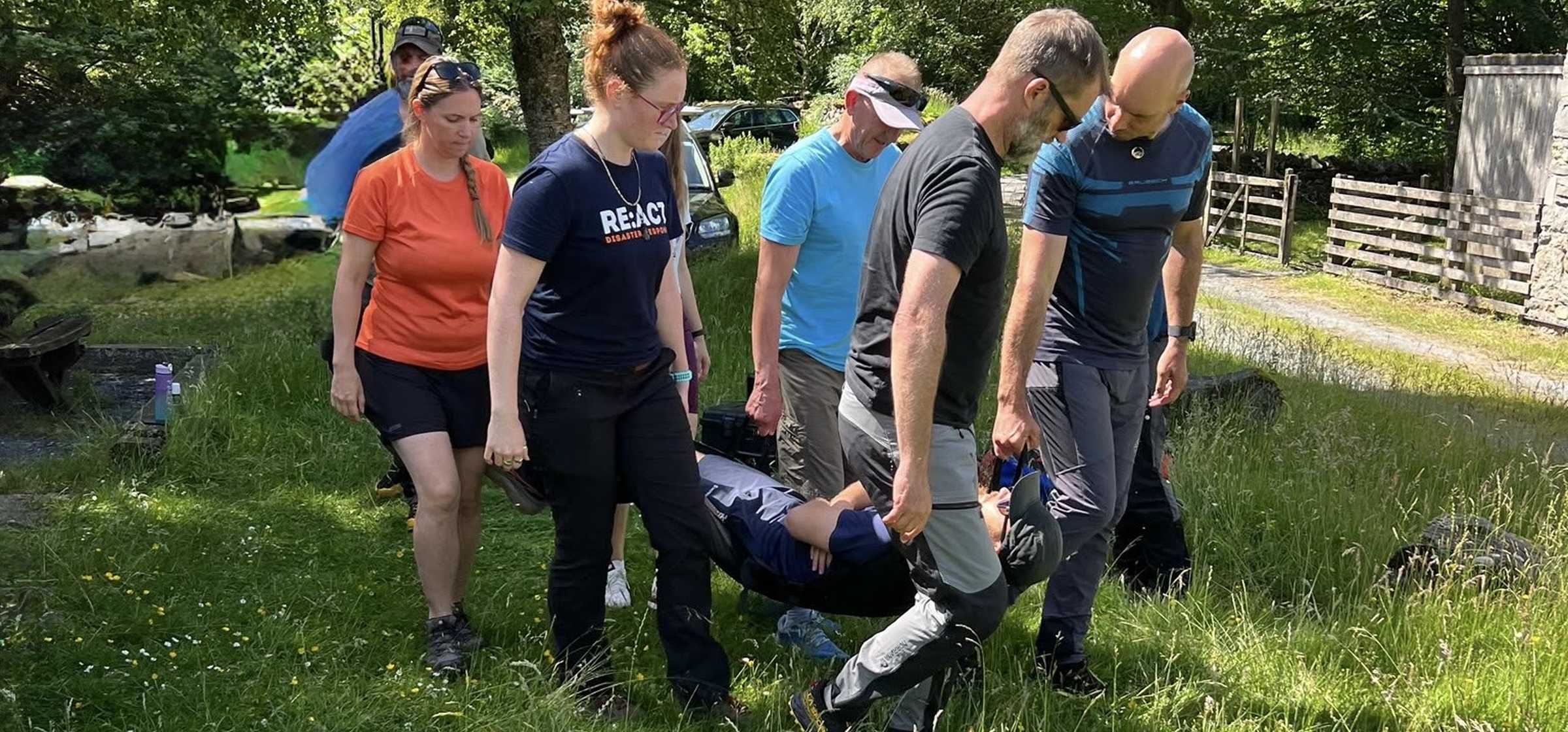
(Title image above shows Lizzie Beach taking part in casualty management exercises during the Wilderness First Responder course).
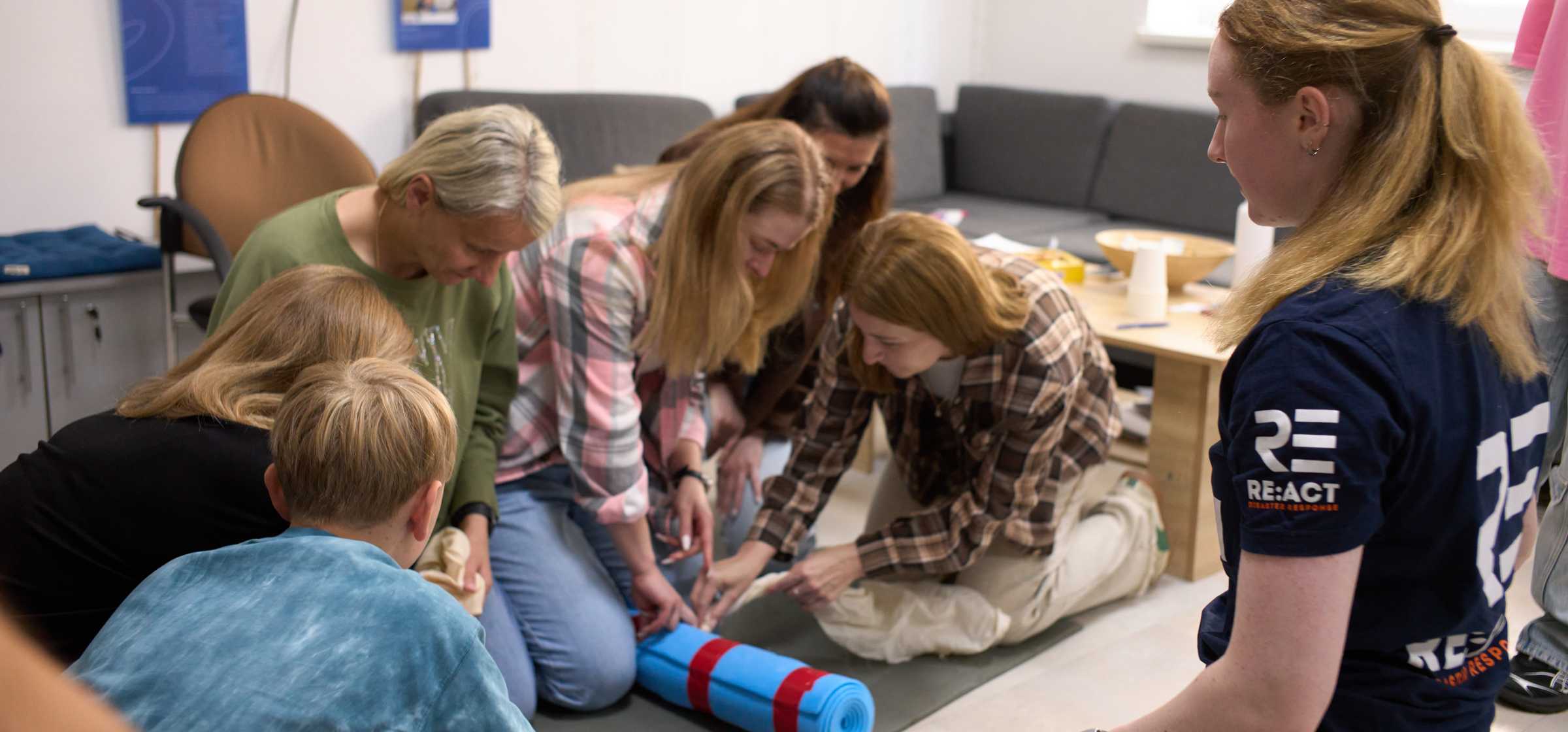
Hannah Cameron-Ross delivering first aid and casualty care training to civilians in Ukraine in June 2026.
For experienced Responder Hannah Cameron-Ross, the value of the course became evident almost immediately. Hannah previously deployed to the 2023 Morocco earthquake response and has since travelled to Ukraine twice with REACT, helping deliver trauma and incident management training to frontline communities living with the realities of conflict.
Drawing on the knowledge gained through the WFR course, Hannah has been able to pass on practical medical skills to civilians facing unpredictable and often dangerous situations, helping build resilience where access to emergency care may be delayed.
Reflecting on the course, Hannah said:
“Completing the R2RI Wilderness First Responder course has given me a stronger foundation in patient assessment, trauma care and decision-making when help may be delayed or conditions are unpredictable”.
She added:
“Those skills directly shaped how I approach deploying to Ukraine, giving me the confidence to deliver training, adapt under pressure and support others in environments where preparedness really matters.”
For both Lizzie and Hannah, the Wilderness First Responder course represents far more than an additional qualification. It provides the confidence, practical skills and sound judgement needed to operate safely and effectively when infrastructure has failed, resources are limited and every decision counts.
Whether responding directly to disasters or empowering communities through training, that investment in preparedness enables REACT Responders to make a meaningful difference when it matters most. Because effective humanitarian action doesn't begin when disaster strikes, it begins long before deployment, through the commitment to train, prepare and remain ready to respond.