

Prepared to Respond: Inside REACT's Wilderness First Responder Training
Posted by Comms Team 02nd July 2026 News
Estimated Reading Time: 2 mins
When REACT Responders deploy, they often work in environments where infrastructure has failed, access to healthcare is limited, and help may be hours or even days away. In these situations, preparedness is more than a principle; it's a responsibility.
That's why REACT partners with Remote Area Risk International (R2Ri) to deliver specialist Wilderness First Responder (WFR) training, equipping our teams with the knowledge, skills, and confidence to provide safe, effective medical care in remote and austere environments before additional support arrives. The 7-day Remote Medical Wilderness First Responder course is designed specifically to prepare responders for critical emergencies in remote and austere environments.
Unlike standard outdoor first-aid courses, the WFR curriculum is taught by a multidisciplinary team of genuine remote area medics, doctors, and search-and-rescue experts. The baseline standard ensures that disaster responders understand:
- How to discharge their duty of care safely and ethically.
- How to handle extended casualty management using only backpack-friendly equipment and improvised gear.
REACT volunteers deploy globally, including remote environments where local infrastructure is destroyed or completely overwhelmed or simply not available. This intensive training program equips them with enhanced medical knowledge and skills required to keep victims and team members alive while awaiting rescue or evacuation in the event of a serious medical incident in remote and challenging environments.
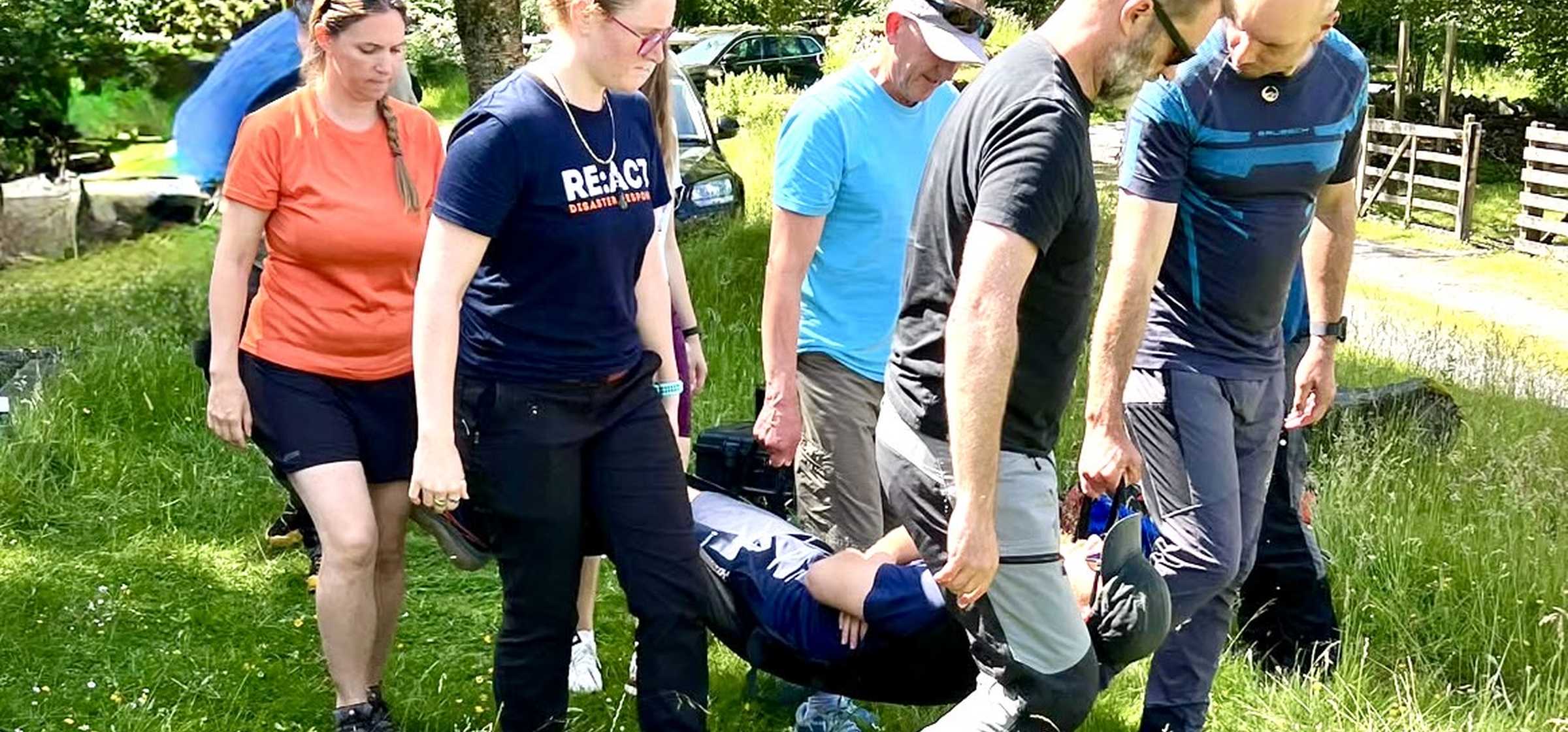
Responder Lizzie Beach & other delegates participate in casualty evacuation on the course
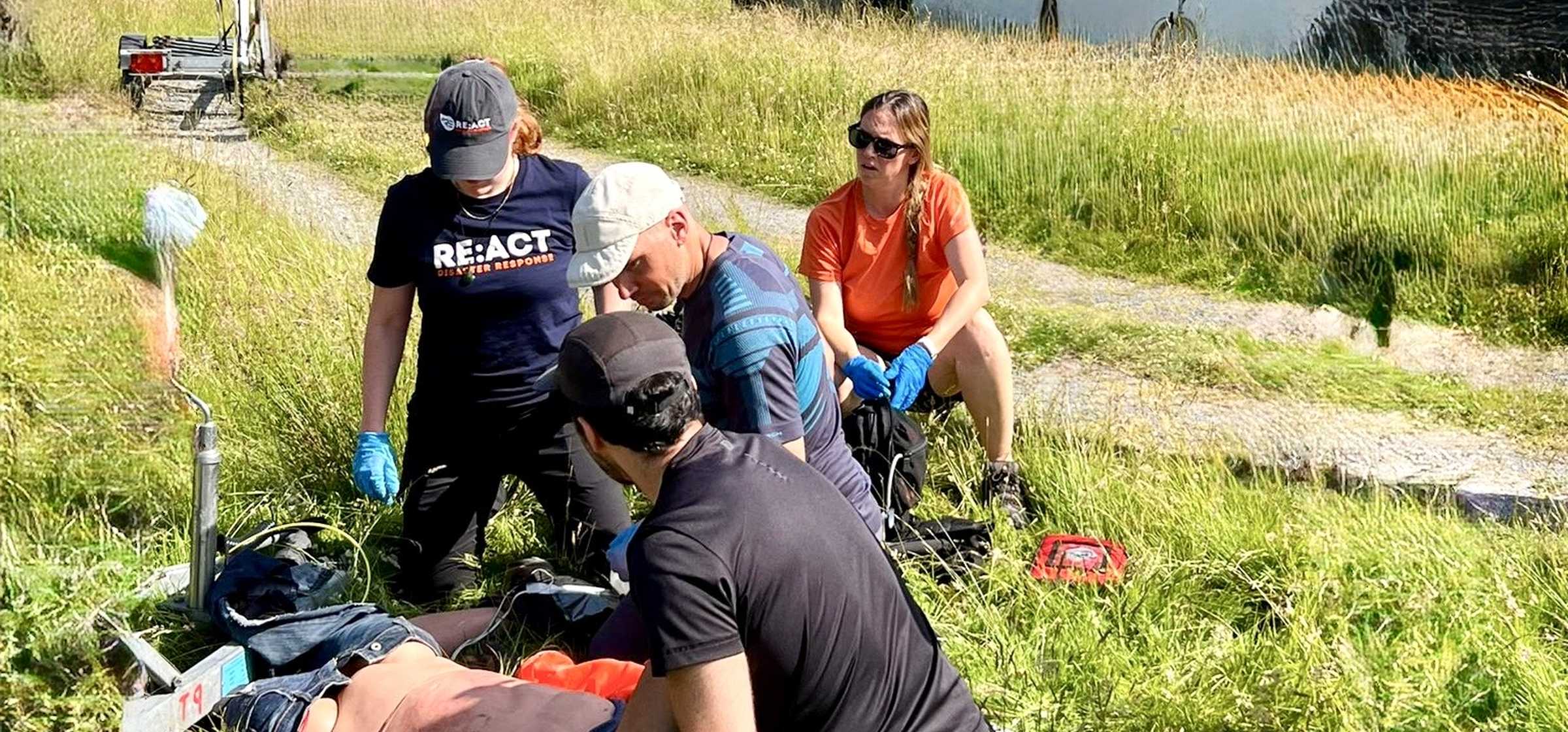
Our Responders are exposed to a diverse range of topics and practical scenarios. Critical assessments help Responders identify and respond effectively to medical emergencies. Throughout the course, they are supported to dive into skill stations and knowledge stations, gaining hands-on experience in dealing with various scenarios that test and challenge problem-solving abilities.
One of the highlights of the course is the focus on medical assessments, including observing and understanding vital signs such as blood pressure, pulse oximetry, temperature, heart rate, rhythm, and quality. Additionally, participants delve into blood sugar monitoring and diabetes management, essential skills when operating in remote areas with limited access to medical facilities.
The course is thoughtfully designed to incrementally build delegates' skills and knowledge. Scenarios and skill stations provide context, helping REACT Responders understand how to apply their newfound knowledge in real-life situations. This gradual layering approach provides a solid foundation for the intensive seven-day program.
The course also covers a broad range of topics, including wound care, pain relief, drowning scenarios, legal aspects, bites, stings, and even avalanche response. With various lectures, hands-on training, and real-world scenarios, participants receive a relevant and holistic education that will best-prepare them to provide medical assistance whilst on deployment.
The Remote Medical Wilderness First Responder course is more than a training programme, it's an investment in readiness. By equipping REACT Responders with the knowledge, practical skills, and confidence to operate safely in some of the world's most challenging environments, we ensure our teams are prepared to provide effective medical care when and where it is needed most. Because when disasters strike in remote or austere locations, preparedness isn't just an advantage, it's what enables REACT to respond rapidly, strengthen the wider humanitarian effort, and help those who need it most.